
If you’ve fallen behind on your student loans, take a breath. You’re not the only one, and your situation isn’t hopeless.
More than five million borrowers in the U.S. are in some form of student default. Life happens. Jobs change, health issues arise, and budgets tighten. Missing payments doesn’t make you irresponsible; it makes you human.
At Scholarship Nerd, we exist to take the fear out of higher education finances. This guide will help you understand what student loan default really means, how to recover from it, and how to protect your future opportunities.
What Is Student Loan Default?
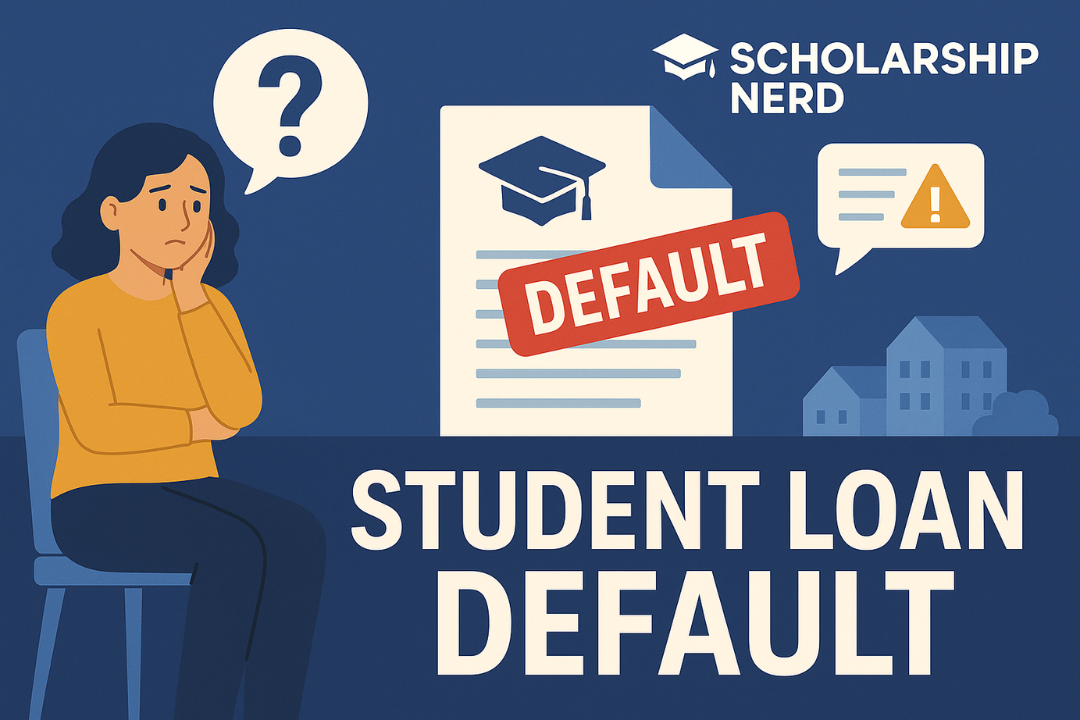
Student loan default happens when you’ve missed payments for an extended period and your lender decides you’ve stopped meeting your repayment obligations.
For federal student loans, default usually begins after 270 days (about nine months) without a payment. For private loans, the window is shorter, often 120–180 days, depending on the lender.
Think of it like this: missing one payment makes you late, but default means your loan has been turned over to collections and your repayment plan is no longer active.
In short: Delinquency means you’re behind. Default means the loan has officially broken trust. But trust can be rebuilt, and you absolutely can start over.
What Happens If You Default on Student Loans?
Default can feel like a cascade of consequences. One letter turns into many, and suddenly it seems like everything is falling apart. But let’s slow it down and look at what’s actually happening.
When a loan enters default:
- Your credit score drops. The default appears on your credit report and may stay there for up to seven years.
- Collections begin. Your loan might be transferred to a debt collection agency or the Default Resolution Group for federal loans.
- Wages or tax refunds may be garnished. The government can legally withhold part of your paycheck or intercept your tax refund to recover the balance.
- You lose access to aid. Until you fix the default, you won’t qualify for new federal student aid or benefits like deferment or forbearance.
Here’s what won’t happen: you cannot go to jail for student loan default. That’s a common myth that causes unnecessary panic. Default is a financial issue, not a criminal one.
So yes, it’s serious, but it’s also solvable.
How to Get Out of Student Loan Default
The path out of default isn’t one-size-fits-all. But no matter where you start, it begins with reconnecting with your loan servicer, learning your options, and choosing a path that fits your situation.
Here are the main routes back to good standing.
1. Loan Rehabilitation (Federal Loans)
This is like a structured second chance. You’ll agree to make nine affordable, on-time payments within ten months, usually around 15 percent of your discretionary income. Once complete, your loan returns to “current” status, and the default mark is removed from your credit history.
Rehabilitation is available only once per loan, so use it wisely, but it’s a strong option if your goal is credit repair.
2. Loan Consolidation
If you want faster relief, consolidation may help. It combines your old loans into a single new Direct Consolidation Loan, giving you a clean slate. You’ll either make three on-time payments first or enroll in an Income-Driven Repayment (IDR) plan right away.
Consolidation works best for borrowers who want to regain financial aid eligibility quickly, such as those returning to school.
3. Fresh Start Program (Federal Loans)
This initiative from the Department of Education offers eligible borrowers an automatic way to clear defaults with minimal paperwork. It temporarily restores aid access and removes the default notation from credit reports.
If you haven’t checked your eligibility yet, visit Federal Student Aid (FSA).
4. For Private Loan Borrowers
Private loan servicers don’t follow federal rules, but you still have options. Contact your lender and ask about hardship repayment, settlement offers, or rehabilitation-like programs. You can also get free, judgment-free help through the National Foundation for Credit Counseling (NFCC).
Remember: The earlier you act, the more options you’ll have. Ignoring calls may feel easier today, but opening that letter could be the start of your financial comeback.
Preventing Student Loan Default Before It Happens
Here’s how you can stay on top of things, even when money gets tight:
1. Sign up for Income-Driven Repayment (IDR).
These plans adjust your payment to fit your income and family size. Some borrowers even qualify for $0 monthly payments.
2. Ask for deferment or forbearance if needed.
If you’re facing temporary hardship such as unemployment or illness, you can pause payments without penalty.
3. Talk to your servicer early.
Servicers aren’t your enemy. Their job is to help you stay in good standing. The earlier you reach out, the easier it is to find a solution.
4. Automate your payments.
Many servicers offer small interest rate reductions for autopay, and it removes the stress of remembering due dates.
5. Set a realistic budget.
Track expenses, set small savings goals, and be honest about what you can afford.
Real talk: The goal isn’t to be perfect. It’s to stay in communication and keep your loans from snowballing.
Recovering Financially After Default
Getting out of default is the first victory, but rebuilding confidence is just as important.
Once your loans are current again:
- Check your credit report. Confirm that your default is marked “resolved” or “rehabilitated.”
- Start small with credit repair. Keep other accounts current, pay on time, and use a secured credit card if needed.
- Regain aid eligibility. After rehabilitation or consolidation, you can once again apply for new federal student loans or grants.
- Seek trusted help. The Consumer Financial Protection Bureau (CFPB) and NFCC offer free guidance for rebuilding financial health.
Debt stress is real, but progress is powerful. Every on-time payment is proof that you’re moving forward.
FAQs About Student Loan Default
How long before default happens?
Federal loans default after 270 days of missed payments; private loans vary between 120 and 180 days.
Can I fix a defaulted student loan?
Yes. Through rehabilitation, consolidation, or Fresh Start, you can bring your loans back to good standing.
Can I go to jail for student loan default?
No. Student loan default is not a criminal matter.
How long does default stay on my credit report?
Typically seven years, but rehabilitation can remove the mark sooner.
Can I get aid again after default?
Yes. Once you’ve resolved your default, your eligibility for federal aid is restored.
Moving Forward: You Deserve a Fresh Start
Default can feel like a dead end, but it’s really a detour. With the right plan and support, you can rebuild your credit, regain your aid, and keep your education dreams within reach.
If you’re feeling weighed down by debt, remember that scholarships are one of the most powerful ways to reduce future borrowing.
Explore verified scholarships here or learn how to manage your tuition costs.