If you’ve ever looked at your bookstore receipt and thought, “How can one semester’s textbooks cost more than my rent?” — you’re not alone.
According to the College Board, college students spend an average of $1,200–$1,600 each year on textbooks and course materials. It’s a major financial stressor, especially when you’re already managing tuition, housing, and everyday expenses.
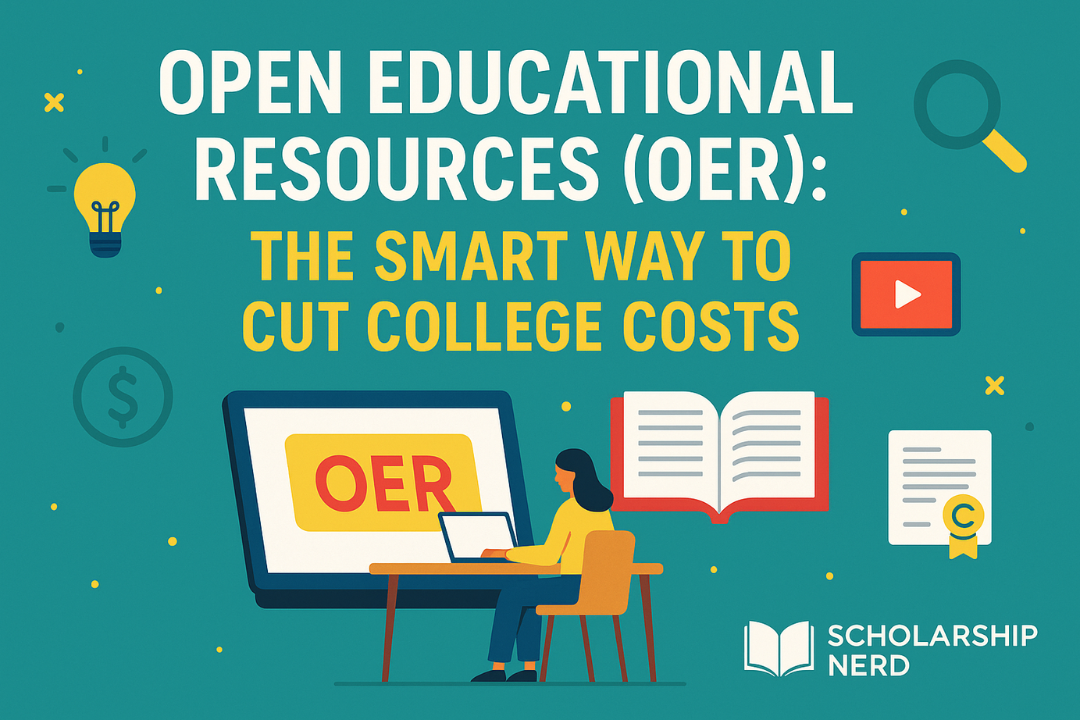
That’s where Open Educational Resources (OER) come in. These free, high-quality learning materials are transforming college affordability and access. Whether it’s a peer-reviewed biology textbook or a full online course from MIT, OER gives students legitimate, legal ways to learn without the financial strain.
What Exactly Are Open Educational Resources?
Open Educational Resources (OER) are teaching and learning materials that are freely available for anyone to use, adapt, and share. The term was officially defined by UNESCO as “teaching, learning, and research materials in any medium that reside in the public domain or are released under an open license allowing no-cost access, use, adaptation, and redistribution by others.”
In simpler terms:
- Free: You don’t pay for access.
- Open: You can use and remix them legally.
- Educational: They’re created by real educators and institutions.
OER come in many forms, including:
- Textbooks – like those from OpenStax, developed and peer-reviewed by university faculty.
- Full courses – such as MIT OpenCourseWare, which offers complete MIT courses online for free.
- Videos and tutorials – from platforms like Khan Academy and Coursera.
- Lesson plans and simulations – found on OER Commons and MERLOT.
Most OER are shared under Creative Commons (CC) licenses — an international standard created by Creative Commons that tells you what you can legally do with the material.
A quick breakdown:
- CC BY: You can use and modify the material as long as you credit the author.
- CC BY-NC: Same as above, but not for commercial use.
- CC BY-SA: Share alike — if you remix it, your version must have the same license.
In other words, OER = free, flexible, and legal learning.
How OER Can Save You Hundreds (or Thousands) in College
For decades, textbook prices have risen more than three times the rate of inflation. Many students skip buying required books simply because they can’t afford them. This can impact grades, participation, and overall academic success.
Using OER changes that.
Research from OpenStax shows that its adoption in U.S. classrooms has saved students more than $200 million collectively, with comparable academic outcomes to traditional materials. These aren’t “knockoff” resources, they’re written and peer-reviewed by subject experts, updated regularly, and supported by major institutions like Rice University.
Real-World Example
At Miami Dade College, one of the largest community colleges in the U.S., entire departments switched to OER textbooks. The result? Over $2.5 million in annual student savings, plus higher student engagement thanks to instant digital access.
The benefits go beyond cost:
- Accessibility: Many OER are mobile-friendly and screen-reader compatible.
- Convenience: Download instantly — no waiting for shipping or restocks.
- Customization: Professors can adapt chapters or add local context.
Where to Find Legitimate OER Textbooks and Courses
When searching for OER, stick to verified platforms that work directly with educators and institutions. Here are a few trusted places to start:
1. OpenStax
- Peer-reviewed textbooks in subjects like biology, psychology, and economics.
- Backed by Rice University and used by 60% of U.S. colleges.
- Digital editions are always free; low-cost print copies are optional.
Why it matters: OpenStax textbooks are reviewed by academic professionals and regularly updated, so quality matches (or exceeds) traditional publishers.
2. Open Textbook Library
- A massive repository maintained by the University of Minnesota.
- Includes faculty reviews, accessibility notes, and user ratings.
Why it matters: You can preview comments from professors before downloading, ensuring you’re using reputable and accurate materials.
3. OER Commons
- A searchable hub of open teaching and learning materials for K–12 and higher education.
- Includes lesson plans, modules, and multimedia objects.
Why it matters: It’s great for interdisciplinary learning and includes filters for license type and educational level.
4. MERLOT
- Managed by the California State University System.
- Features peer-reviewed learning objects, quizzes, and full course modules.
Why it matters: It’s ideal for instructors and students who want interactive resources beyond static textbooks.
5. MIT OpenCourseWare
- Full, archived MIT courses including lecture videos, assignments, and exams.
- Over 2,500 courses available to anyone, anywhere.
Why it matters: It’s an authentic MIT learning experience — for free.
6. EdX and Coursera
- Both platforms host university-level courses that often include OER content.
- Offer free audit options and paid certificates.
Why it matters: Great for supplementing your major or exploring new subjects affordably.
Tips for Making the Most of OER
You’ve found some great OER — now what? Here’s how to make sure you’re using them effectively (and legally):
1. Check the License First
Always look for a Creative Commons license or “public domain” notice. You can remix, adapt, or share. Just credit the author correctly.
Example: “Adapted from OpenStax Psychology, licensed under CC BY 4.0.”
2. Evaluate Credibility
Stick to OER created by educators, universities, or recognized organizations. Look for indicators like:
- Author credentials
- Peer review
- Publication or revision date
3. Use Digital Study Tools
Annotate PDFs using tools like Hypothesis, Notion, or Microsoft OneNote. These tools help organize OER notes and citations in one place.
4. Blend OER with Required Materials
If your course still uses commercial textbooks, ask your professor whether OER supplements are allowed. Many instructors appreciate proactive students who find legitimate, cost-saving alternatives.
5. Think Accessibility
Most OER platforms offer screen-reader friendly formats or downloadable EPUB files for offline reading.
The Future of Affordable Education
OER aren’t just a quick fix for high textbook costs, but instead they’re part of a global shift toward open access education and educational equity.
Organizations like UNESCO and the U.S. Department of Education are actively expanding OER adoption through policy and funding. More universities are integrating open materials into degree programs, ensuring that every student can access quality learning.
Explore more cost-saving strategies at Scholarship Nerd — where every resource is verified, legitimate, and designed to help you thrive.
Frequently Asked Questions About Open Educational Resources (OER)
What are Open Educational Resources (OER)?
OER are free, shareable materials such as textbooks, videos, and full courses that anyone can legally use and adapt. They’re often released under Creative Commons licenses, making them safe and accessible for all learners.
How can OER help students save money in college?
By replacing paid textbooks with open-access ones, OER can save you hundreds or even thousands each year. They provide the same quality learning without the publisher markup.
Are Open Educational Resources legal and trustworthy?
Yes — legitimate OER are reviewed, licensed, and distributed by trusted organizations like OpenStax, MIT OpenCourseWare, and UNESCO.
Where can I find legitimate OER textbooks?
Check verified platforms like Open Textbook Library, OER Commons, MERLOT, and OpenStax. Always look for a clear Creative Commons license.
Can OER replace traditional textbooks completely?
In many courses, yes. Colleges nationwide have transitioned to OER-based instruction without sacrificing quality. However, specialized programs may still require traditional texts.
Who creates Open Educational Resources?
OER are developed by educators, universities, nonprofits, and international organizations like UNESCO. Many are funded by public grants or university partnerships to promote open, equitable access to education.