
A New Way to Pay for College?
For many students and families, paying for college can feel overwhelming. Between rising tuition costs and confusing loan terms, finding a fair, flexible way to fund your education is not easy.
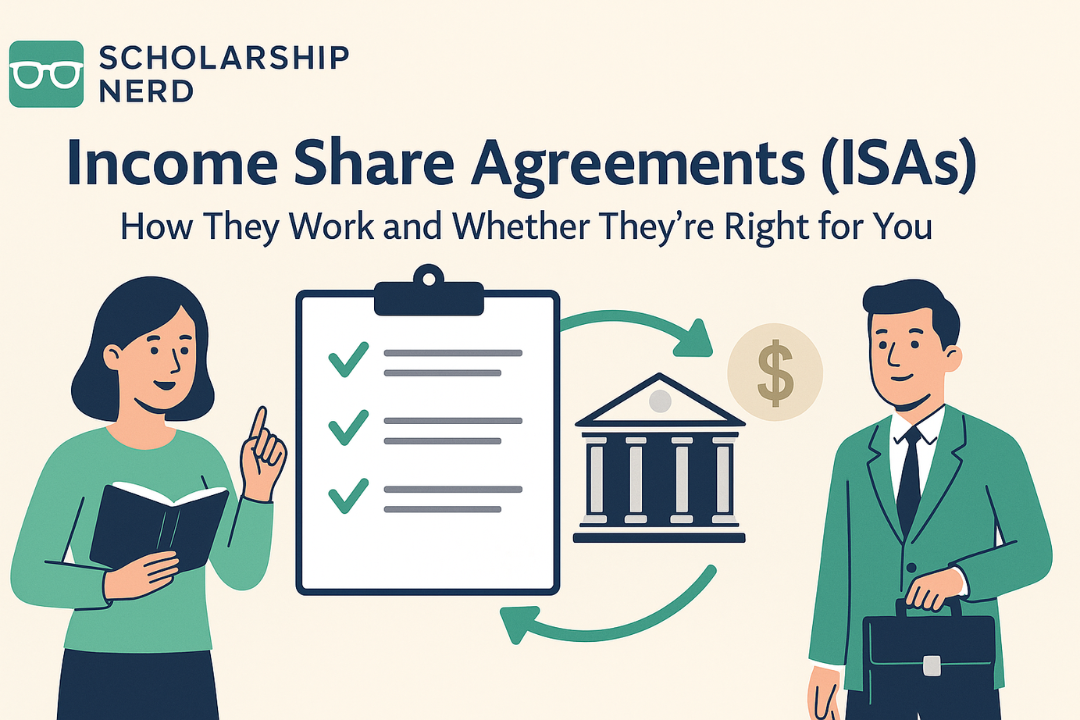
That is where Income Share Agreements (ISAs) come in. Instead of taking out a traditional loan, an ISA allows you to pay a percentage of your future income for a set period after graduation.
The idea sounds simple and even empowering, but ISAs come with both benefits and drawbacks. In this guide, we explain how they work, what to watch out for, and how to decide if an ISA might fit your situation.
What Is an Income Share Agreement (ISA)?
An Income Share Agreement (ISA) is a contract between a student and a school or funding provider. The provider covers part or all of your tuition costs upfront, and in return, you agree to pay a fixed percentage of your future income for a defined period after you graduate.
Instead of repaying a loan with interest, you share a portion of your income for a few years once you are working.
This concept started gaining traction with programs such as Purdue University’s “Back a Boiler” ISA Fund. The model was designed to reduce the pressure of fixed student loan payments, especially for students unsure of what they will earn after graduation.
Most ISAs share a few core features:
- Amount funded: The provider pays for a portion of your tuition or training program.
- Payment percentage: You agree to share a small, set percentage of your income (often between 5% and 10%).
- Income threshold: Payments begin only when you earn above a minimum salary, such as $30,000 or $40,000 per year.
- Term length: You make payments for a fixed number of years, typically 5 to 10, or until you have repaid a maximum cap (often 1.5–2 times the amount funded).
In short, an ISA lets you fund college now and repay later based on your earnings, not a rigid loan balance.
How Do Income Share Agreements Work?
Think of ISAs as a shared investment in your future. Here is how the process typically works:
- Funding Stage
You apply for an ISA through your college or a private provider such as Clasp or Better Future Forward. If approved, the program covers part or all of your tuition expenses upfront. - Graduation and Grace Period
After finishing school, you get a short grace period (usually 3–6 months) before repayments begin. This gives you time to find a job. - Repayment Begins
Once you start earning above the income threshold (for example, $30,000 per year), you begin paying a fixed percentage of your income each month. - Payment Cap or Term Completion
You stop paying when either:- You reach the end of your repayment term (for example, 5 years).
- You hit your repayment cap, meaning you have paid the maximum required amount (often around 1.5x–2x what was funded).
Example:
If your ISA covers $10,000 in tuition and your agreement sets a 10% income share for 5 years with a $30,000 income threshold:
- If you earn $35,000, you pay $3,500 a year.
- If you earn $50,000, you pay $5,000 a year.
- If your income drops below $30,000, payments pause automatically.
Pros and Cons of Income Share Agreements
ISAs sound appealing because they tie repayment to your success, but they also have trade-offs. Understanding both sides can help you make a confident decision.
Benefits of ISAs
- No Interest: You do not accrue interest as you would with a traditional student loan.
- Income Flexibility: Payments adjust based on how much you earn. If you make less, you pay less, and if you are unemployed, payments pause.
- Repayment Cap: Many ISAs limit how much you will ever pay, protecting you from excessive debt.
- Shared Incentives: Schools and funders have a stake in your success and may offer additional career support.
Drawbacks of ISAs
- Uncertain Total Cost: If your income rises quickly, you may end up paying more than you would with a loan.
- Limited Availability: Only certain schools and programs offer ISAs, and eligibility can be restrictive.
- Complex Contracts: Terms vary widely, and small differences in language can significantly affect your payments.
Regulatory Gray Area: ISAs are not yet standardized or federally regulated, which can make consumer protections less clear.
Comparison: ISA vs. Student Loan
Who Should Consider an ISA?
ISAs can be a good fit for certain students but not for everyone.
You might benefit from an ISA if:
- You are entering a high-demand or fast-growing field such as technology, business, or healthcare.
- You prefer flexible, income-based payments instead of fixed monthly loan bills.
- You lack a cosigner or credit history for private loans.
- You value knowing your payments will pause automatically if your income dips below a certain level.
You might want to avoid ISAs if:
- You expect a high-paying career, such as in law, medicine, or finance, since your total payments could exceed a loan’s cost.
- You want predictable repayment terms.
- You are uncomfortable with income-based monitoring or sharing salary information.
Tip: Always review the full contract. Ask how unemployment, job changes, or relocation might affect repayment.
Which Colleges and Programs Offer ISAs?
While ISAs are not yet mainstream, several schools and organizations have offered them.
Universities:
- Purdue University – The “Back a Boiler” program was one of the first large-scale ISA initiatives.
- Clarkson University – Offers ISA options through partner funding groups.
- University of Utah – Operates the “Invest in U” program for select majors.
Private and Nonprofit Providers:
- Clasp – Partners with colleges across the country.
- Better Future Forward – Nonprofit model designed for low-income and first-generation students.
Are ISAs Safe? What to Know About Regulation and Consumer Protection
ISAs are relatively new and not yet classified as traditional loans. However, the Consumer Financial Protection Bureau (CFPB) and the Federal Trade Commission (FTC) oversee many aspects of their operation.
Key things to know:
- Transparency Requirements: Providers must clearly disclose repayment terms, including the percentage, cap, and income threshold.
- Income Protections: You cannot be charged if your income falls below the agreed minimum threshold.
- Regulatory Oversight: Both the CFPB and FTC monitor ISA providers for fair practices and accurate marketing.
- Risks: Some programs have been criticized for unclear contracts or inconsistent protections, so always read carefully before signing.
ISAs can be legitimate when offered by trustworthy providers, but they are not all the same. Research, compare, and when in doubt, consult a college financial aid counselor.
FAQs About Income Share Agreements
What is an income share agreement for college?
An income share agreement (ISA) is a funding option where students receive tuition support upfront and agree to pay a percentage of their future income for a set number of years instead of repaying a loan with interest.
How do income share agreements work?
After graduation, you start making payments only once your income reaches a certain threshold. The payment amount is tied to your salary, so if you earn less, you pay less.
Are income share agreements better than student loans?
It depends on your circumstances. ISAs offer flexibility and no interest, which can help if your income is uncertain, but traditional loans may cost less for higher earners.
Who qualifies for an income share agreement?
Eligibility varies by provider. Most require you to be a U.S. citizen or permanent resident, enrolled in a partner school, and progressing toward graduation.
What happens if you cannot find a job after graduation?
If you are unemployed or earn below the threshold, your payments are paused until your income rises again.
Which colleges offer income share agreements?
Programs have been offered by Purdue University, University of Utah, and Clarkson University.
Are income share agreements safe or regulated?
ISAs are legal but still developing under federal oversight. The CFPB and FTC require transparency and fairness, but protections may differ from traditional loans.
Bottom Line: Should You Choose an Income Share Agreement?
ISAs can offer flexibility and protection for students uncertain about their future earnings, but they are not the right solution for everyone.
Before signing, consider:
- How much you expect to earn in your chosen career field.
- The repayment cap, term length, and income threshold.
- How the total cost compares to a traditional loan.
Income Share Agreements can work well for students who want income-based flexibility. But it is important to compare all your options and understand every clause before committing.