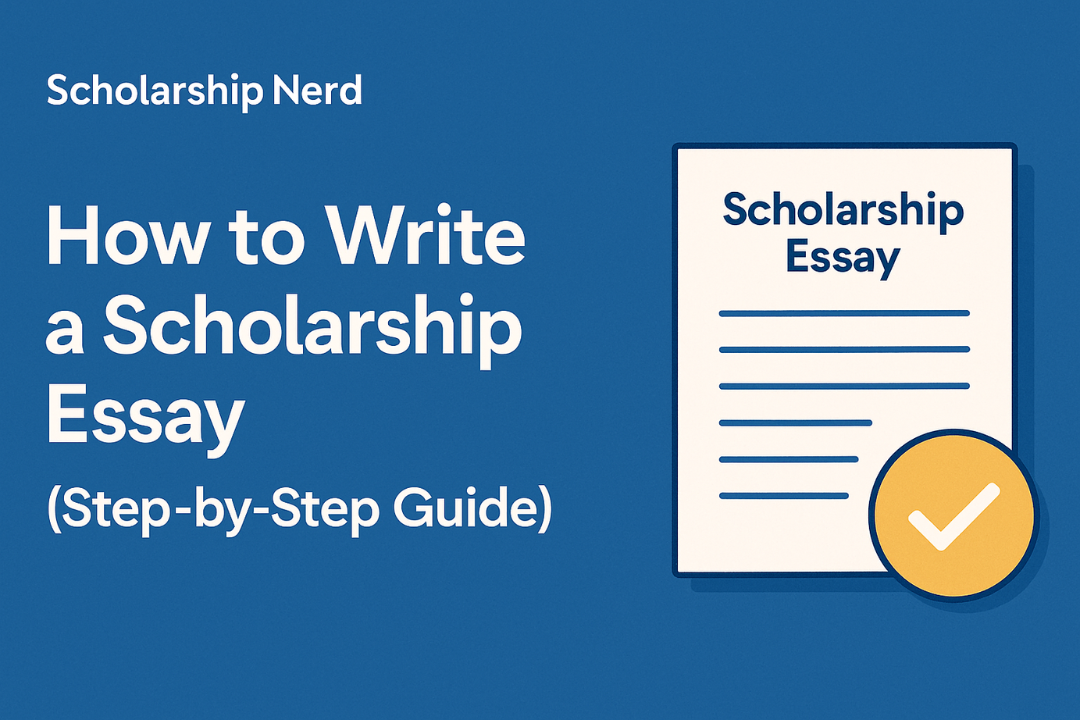

Writing a scholarship essay can feel intimidating, especially when you know it could determine whether you receive crucial funding for college. You are told to “stand out” or “be unique,” but what does that actually mean in practice?
Do not worry. You are not alone in feeling stuck.
In this guide, I will walk you through every step of writing a standout scholarship essay, from brainstorming your story to polishing the final draft. Along the way, you will learn what committees are really looking for, common pitfalls to avoid, and how to structure a powerful essay.
Let’s start by stepping into the shoes of the people reading your essay: the scholarship committee.
1. Understand What Scholarship Committees Want
Most students start writing without really understanding who they are writing for. Scholarship committees are made up of people who want to help motivated students succeed. What they care about most often falls into three categories:
- Authenticity: Committees want to hear your real voice. Essays that sound overly polished, robotic, or “perfect” tend to blur together. Speak honestly, and you will be more memorable.
- Relevance: Great essays connect your story directly to the scholarship’s purpose. If it is for future educators, talk about your passion for teaching. If it is for STEM majors, highlight curiosity, innovation, or problem-solving.
- Personal growth: They love to see self-awareness, how you have learned from challenges, changed, or grown as a person.
Pro tip: Read the scholarship description carefully before writing. Ask yourself: “What kind of story would make this organization proud to invest in me?”
When you align your essay with their mission and stay authentic to your story, you will instantly stand out.
2. Brainstorm Your Story and Core Message
Before you type a single word, take a few minutes to think deeply about what defines you. The best scholarship essays come from reflection, not just clever writing.
Here is a helpful exercise: grab a notebook and jot down quick answers to these prompts.
- When did you overcome a challenge or setback?
- What personal value or cause drives you the most?
- How has your background shaped your goals or worldview?
- What moment changed how you see education or your future?
Once you have brainstormed, look for patterns or recurring ideas. Those themes will often point toward your core message—the “big idea” behind your essay.
For example:
If you grew up translating for your parents, your message might center on resilience and communication. If you started a tutoring program, it might highlight access and equity in education.
Try this: Write one sentence that sums up your story in a nutshell. That becomes your thesis, the thread tying your essay together.
3. Structure Your Essay for Maximum Impact
Even a powerful story can fall flat if it is disorganized. Scholarship reviewers appreciate essays that are easy to follow and emotionally engaging. Think of your essay like a short movie, where every scene has a purpose.
Here is a structure that works beautifully for most scholarship essays:
Scholarship Nerd Tip: A simple, clear structure helps readers follow your story without getting lost in the details.
4. Write with Authenticity and Clarity
Now comes the part most students overthink: actually writing the essay.
You do not need to sound like a professional author. You just need to sound like yourself.
Here are a few guiding principles:
- Use your natural voice. Try reading your draft out loud. Does it sound like something you would actually say? If not, rewrite it until it does.
- Be specific. Vague statements feel empty. Replace generalities with small, vivid moments.
- Vague: “I have always wanted to help others.”
- Specific: “Volunteering at the food bank every Saturday taught me how small actions can create real change.”
- Show, do not tell. Instead of saying you are hardworking, describe a time when you proved it.
- Balance honesty with optimism. It is okay to mention struggles, but always include what you learned from them.
Admissions Counselor Note: The most memorable essays come from students who write with heart, not perfection. Committees can feel genuine emotion, and that is what makes them remember you.
5. Edit, Proofread, and Get Feedback
Once you have written your first draft, take a break and come back with fresh eyes. The editing stage is where you turn a solid story into a winning essay.
Here is what to focus on during revision:
Scholarship Essay Editing Checklist
Before submitting, ask yourself:
- Does my essay fully answer the prompt?
- Can the reader clearly identify my theme or message?
- Have I shown personal growth or learning?
- Is my language clear, concise, and free of grammar mistakes?
- Do my introduction and conclusion feel connected?
- Am I within the word limit?
Editing is also about perspective. You know your story inside out, but your reader does not. Getting feedback from a teacher, counselor, or mentor can be invaluable.
6. Common Mistakes to Avoid in Scholarship Essays
Even great writers make mistakes that can cost them points. Here are some of the most common:
- Being too generic: Avoid repeating the scholarship’s mission statement or using vague goals like “I want to make a difference.” Make it personal.
- Recycling without tailoring: You can reuse ideas, but adapt each essay so it fits the specific prompt.
- Over-dramatizing hardship: Vulnerability matters, but it should lead to insight, not sympathy.
- Skipping the edit: Typos and errors send the wrong message about effort and care.
- Plagiarism or AI overuse: Tools can help brainstorm, but your story must come from your own experience.
A great essay is not about perfection. It is about honesty and connection.
7. Scholarship Essay Example (Annotated)
Let’s look at a real essay excerpt (names changed for privacy) to see how these ideas come together.
Prompt: “Describe a time when you made a meaningful impact on your community.”
Essay (excerpt):
“The first day I volunteered at the local library’s literacy program, I met Sofia, a 9-year-old who could not yet read chapter books. We started small, sounding out words and tracing letters. Over months, I watched her confidence grow. The day she read aloud for the first time, I realized literacy was not just about reading; it was about belonging. That is why I want to major in education, to make learning accessible for every child.”
Why This Works
- Strong hook: Opens with a personal moment that immediately draws the reader in.
- Focused story: Zeroes in on one experience instead of trying to cover everything.
- Emotional reflection: Connects what happened to a deeper motivation.
- Polished tone: Feels genuine and positive, not forced or dramatic.
8. Final Thoughts: Your Story Is Enough
You do not need to have started a nonprofit or survived something extraordinary to write a compelling essay.
The most powerful essays often come from ordinary moments, the kind that reveal who you are and what you care about. These are also the moments that members of scholarship committees can connect with personally.
Scholarship committees are not looking for perfection; they are looking for potential. Your story, told honestly, is enough.
Take a deep breath, trust your experiences, and start writing. You can do this.