
What Is Student Loan Consolidation?
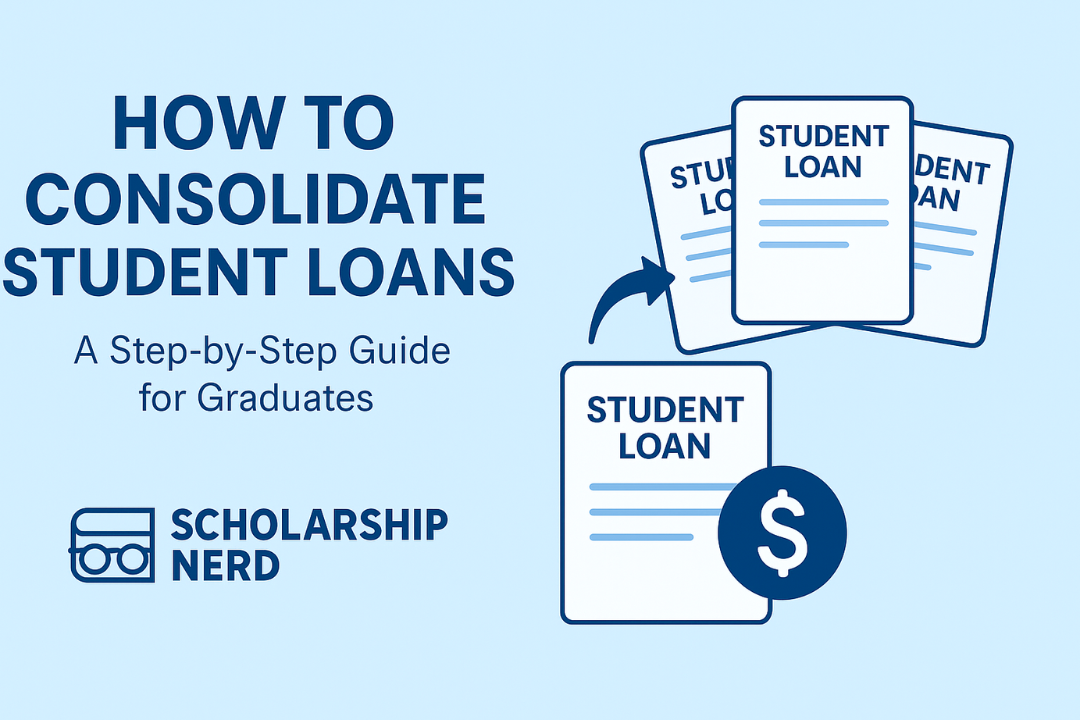
Student loan consolidation means combining multiple existing loans into a single new loan with one monthly payment. Instead of juggling different providers and due dates, you’ll deal with just one. This can make your repayment process more organized and easier to manage.
There are two main types of consolidation:
1. Federal Loan Consolidation (Direct Consolidation Loan):
Managed by the U.S. Department of Education, this program lets you merge multiple federal loans into one. The new fixed interest rate is the weighted average of your current loans, rounded up to the nearest one-eighth of a percent.
2. Private Loan Consolidation (Refinancing):
With private consolidation, a lender pays off your existing loans and replaces them with a new one, ideally at a lower interest rate. Be cautious here: if you refinance federal loans privately, you’ll lose access to benefits such as income-driven repayment (IDR) plans, deferment options, and Public Service Loan Forgiveness (PSLF).
Consolidation Quick Eligibility Check
- Federal Direct Loans and some FFEL or Perkins Loans (if eligible)
- Loans must be in repayment or within the grace period
- You can’t consolidate a loan that’s already been consolidated unless you’re adding new ones
Tip: Review your federal loans and servicer details through studentaid.gov before starting the process.
Why Graduates With Multiple Loans Should Consider Consolidation
Many graduates find themselves making three or more payments each month to different providers, often with different due dates and interest rates. It’s not just time-consuming; it can also increase the chance of missing a payment.
Consolidation helps by:
- Combining multiple payments into one monthly bill
- Extending your repayment term (up to 30 years for federal loans) to lower your monthly payment
- Allowing access to income-driven repayment plans if you weren’t eligible before
- Restoring good standing for certain defaulted loans
While these benefits are real, it’s important to remember that extending your repayment term usually increases the total amount of interest you’ll pay over time. The goal is to make your payments easier to manage without losing sight of your long-term costs.
Pros and Cons of Consolidating Student Loans
Student loan consolidation can be helpful if you’re looking for simplicity and flexibility, but it’s not a universal solution. Weigh the short-term relief of a smaller payment against the long-term cost of potentially paying more interest overall.
How to Consolidate Federal Student Loans (Step-by-Step)
Here’s how to complete a federal loan consolidation through the Department of Education’s Direct Consolidation Loan program.
1. Check Your Loan Details:
Log in to studentaid.gov to review your loan types, balances, and servicers.
2. Complete the Application Online:
The application is free and takes about 30 minutes. Have your FSA ID and loan information ready.
3. Choose Your Repayment Plan:
Select a repayment plan that fits your goals, such as the standard plan or an income-driven repayment (IDR) option.
4. Select Your Loan Servicer:
Choose from the available loan servicers, often the same ones currently managing your loans.
5. Sign the Promissory Note and Submit:
Once submitted, the process typically takes 30 to 60 days. Keep making your regular payments until your new consolidated loan is active.
Important: Avoid companies that charge fees to “help” you consolidate. Federal consolidation is always free when you apply through the official site.
What About Private Student Loans and Refinancing?
If you have private loans, you can’t consolidate them through the federal program. Instead, you can refinance them through a private lender.
Refinancing is similar in that it replaces multiple loans with a new one, but it operates in the private market. You might qualify for a lower interest rate if you have a strong credit history or a creditworthy co-signer.
However, if you refinance federal loans privately, you permanently lose access to federal benefits such as income-driven repayment plans and forgiveness programs. Refinancing might make sense if your main goal is to save on interest and you’re confident you won’t need those protections.
Should You Consolidate Your Loans?
Before applying, take a few minutes to assess your situation. Use this table as a quick guide.
Example:
Jane graduated with three federal loans totaling $27,000. Each has a different interest rate and servicer, and her total monthly payment is $310. By consolidating into one 20-year loan, she reduces her monthly payment to $240 but will pay about $4,000 more in interest over time. The lower monthly payment helps her budget now, but she understands the trade-off.
Common Mistakes to Avoid When Consolidating
- Mixing federal and private loans, which eliminates federal protections
- Expecting your interest rate to drop automatically (it usually won’t)
- Failing to continue payments during processing
- Consolidating too early and losing out on forgiveness progress
- Overlooking small borrower benefits or subsidies that may disappear after consolidation
Taking a few extra minutes to review your loans and understand these pitfalls can prevent frustration later.
After Consolidation – What to Monitor and Next Steps
Once your new loan is in place, it’s important to stay organized and proactive.
- Confirm your new provider and your new payment due date
- Set up automatic payments to avoid missing your first bill
- Reassess your repayment plan every year, especially if your income changes under an IDR plan
- Keep documentation of your previous loans and payments
- If you’re working toward PSLF, verify that your new loan and servicer are eligible
Frequently Asked Questions
What does it mean to consolidate student loans?
It means combining multiple loans into one, so you make a single payment each month instead of several.
Will consolidating lower my interest rate?
Federal consolidation won’t reduce your rate since it’s based on the weighted average of your existing loans. Private refinancing might, but it comes with trade-offs, like potentially more total interest over time.
Can I consolidate private loans with federal loans?
No. Federal and private loans must be handled separately.
How long does consolidation take?
Most federal consolidations are processed within 30 to 60 days, depending on servicer response times.
What happens to PSLF eligibility if I consolidate?
If you have FFEL or Perkins Loans, consolidating them into a Direct Loan may make them eligible for PSLF, but your payment count resets.
For the most accurate and current information, visit the official Federal Student Aid Consolidation page.
Summary and Next Steps
Consolidation can be a valuable tool for simplifying your student loan payments and reducing short-term financial stress.
Here’s what to keep in mind:
- Combine multiple loans only when it simplifies your repayment strategy
- Consider federal consolidation for better repayment flexibility or forgiveness eligibility
- Be cautious about refinancing if you have federal loans you might later need federal protections for
- Always verify the terms before applying
The key is to make sure it aligns with your overall goals and doesn’t cost you more in the long run.